size
capacity


Stadtwerke Buchen GmbH & Co KG und Stadtwerke Walldürn GmbH
Stromabnahme

Vertical PV system
coordinates: 49°36'44.7"N 9°21'09.6"E
The project
Overview
Energiepark Neusaß II, a vertical agrivoltaic system, was installed next to an existing solar park on a site measuring around 8.8 hectares. The local council voted unanimously in favour of the land-use plan in 2022, building started in August 2024, and the system was connected to the grid in June 2025. The project is managed by a local consortium: the Berres and Hennig farms joined forces with municipal energy suppliers Stadtwerke Buchen and Stadtwerke Walldürn in 2023 to set up Energiepark Neusaß II as a joint venture. The two private investors, Berres and Hennig, and Stadtwerke Walldürn each own 20%, while Stadtwerke Buchen owns 40%. This close partnership not only secures broad acceptance in the community, but also ensures that the value created from food production and renewable energy stays in the region.
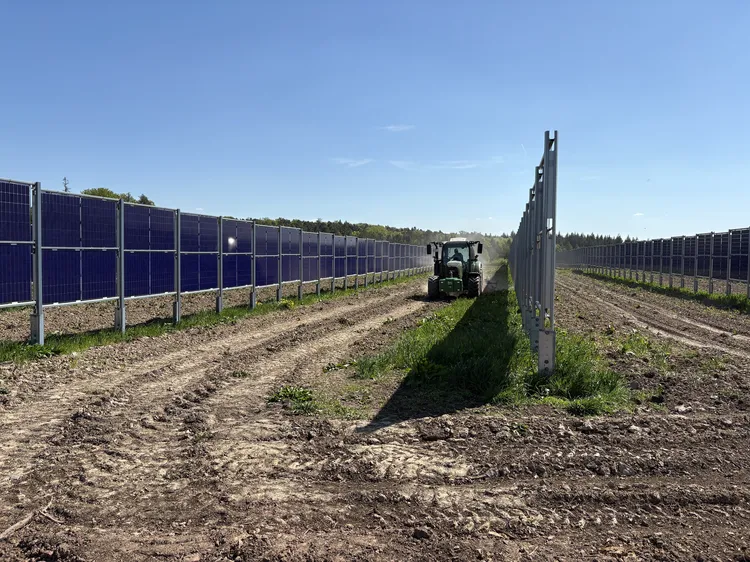
The project is investigating four questions of practical relevance on a large-scale agrivoltaic plant with vertical bifacial PV modules that allow largely undisturbed agricultural use between the rows of modules:
1. Land use: How can agricultural use of the spaces between the PV modules be organised efficiently under the current agricultural policy framework – both for arable and pasture land? What effect do farm-specific marketing strategies have on implementation?
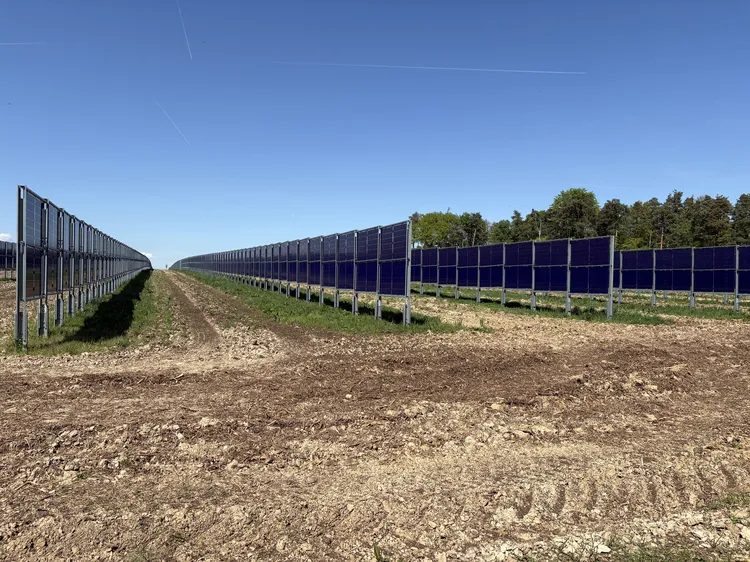
2. Biodiversity: What impact does the agrivoltaic plant have on local biodiversity? Does it result in negative interventions that require compensation measures or does it actually promote biodiversity? How can agricultural environmental measures (e.g. wildflower strips, extensive farming) be integrated into crop rotation?
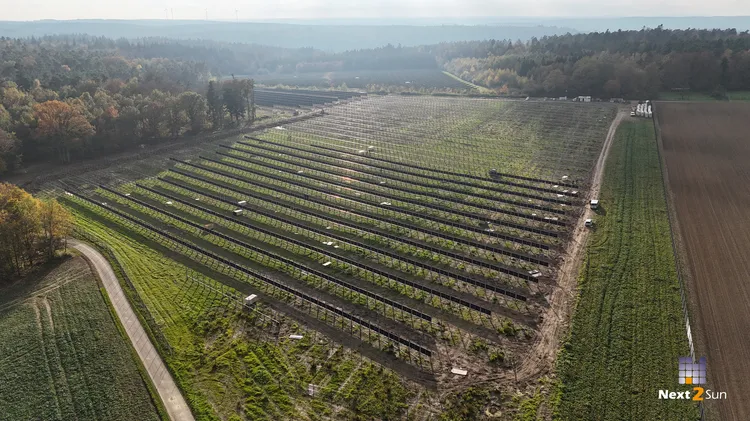
3. Acceptance: To what extent do the local roots of the operators (municipal energy suppliers and farming families) affect acceptance of the agri-PV technology in the local community?
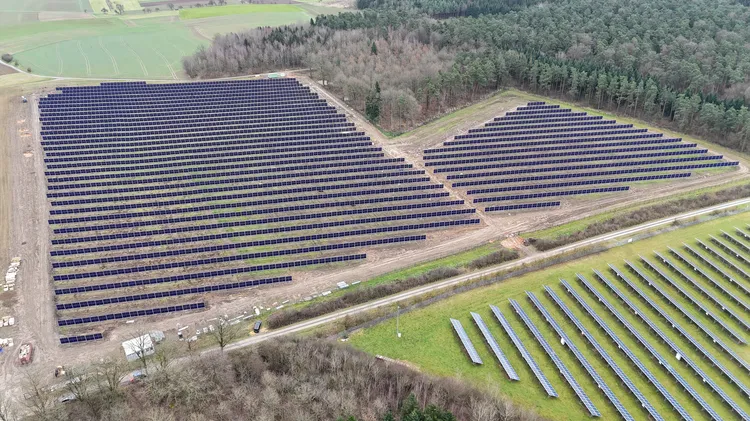
4. Grid usefulness: How does the east-west orientation of the vertical PV modules (Neusaß II) affect grid usefulness compared with an existing conventional solar farm (Neusaß I)? Can this combination be used to achieve optimal energy yields over the course of the day in line with consumption and power grid demand?
for the location