A pillar for the energy transition
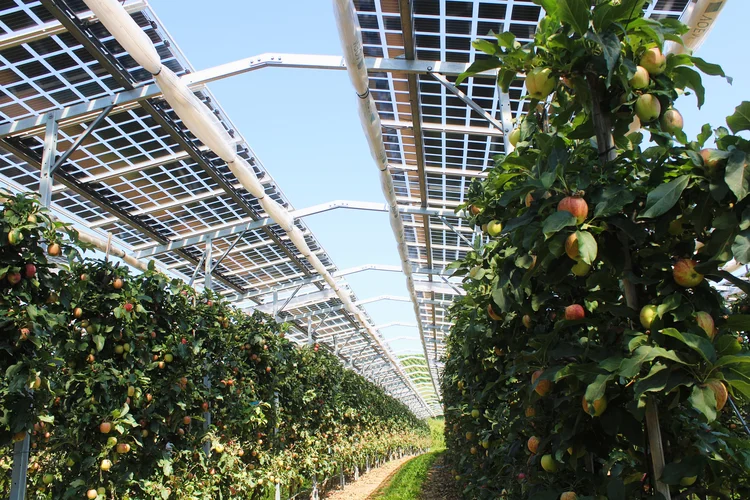
In the future, agrivoltaics could alleviate land-use competition by enabling dual land use, where agricultural products are grown alongside photovoltaic modules generating electricity. To maximize synergies, the complexity of these systems requires thorough study, integrating technical, hydrological, and agronomic considerations during planning. In Baden-Württemberg, farmers, scientists, and project developers collaborate to tackle these challenges and gain deeper insights into this integrated approach.
The project
At a glance
The aim of the first implementation phase of the »Model Region Agrivoltaics for Baden-Württemberg« project is to drive expansion of agrivoltaic technology in Baden-Württemberg. The focus in the first phase, which was led by Fraunhofer ISE and involved 13 project partners, was on pome fruit and soft fruit. Agrivoltaic facilities with a total peak power output of up to 1,700 kWp were installed at five sites in Baden-Württemberg.
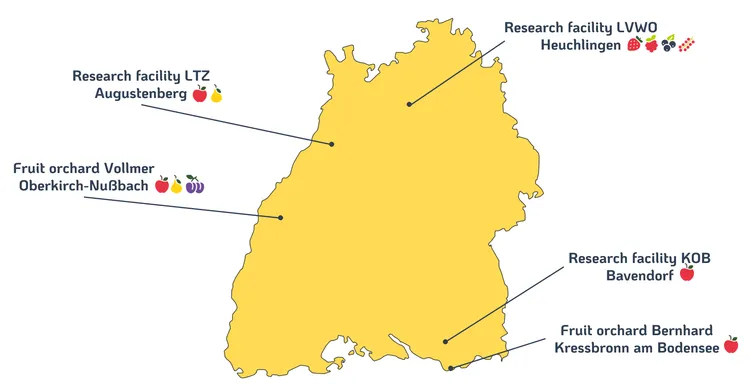
The PV systems in Kressbronn and Bavendorf were installed in 2022, and those in Oberkirch-Nußbach and Heuchlingen in 2023. The last PV systems was installed in 2024 in Augustenberg. A framework programme, under the joint leadership of the University of Public Administration Kehl and Fraunhofer ISE, was launched to connect the sub-projects and exploit synergies.
The project looked at the feasibility of various aspects at different sites, including crop-specific aspects of the photovoltaic system and the choice of crop and variety, and developed a more nuanced conception of the legal framework. The agricultural research is being conducted by Landwirtschaftliches Technologiezentrum Augustenberg (LTZ Augustenberg), a state institute for agriculture in Baden-Württemberg, Kompetenzzentrum Obstbau Bodensee (KOB Bavendorf), a foundation for the promotion of fruit growing in the Lake Constance region, and Staatliche Lehr- und Versuchsanstalt für Wein- und Obstbau (LVWO Weinsberg), a state training and research institute for wine- and fruit-growing. The project was funded by the Baden-Württemberg Ministry for the Environment, Climate and Energy Sector and the Baden-Württemberg Ministry of Food, Rural Affairs and Consumer Protection.
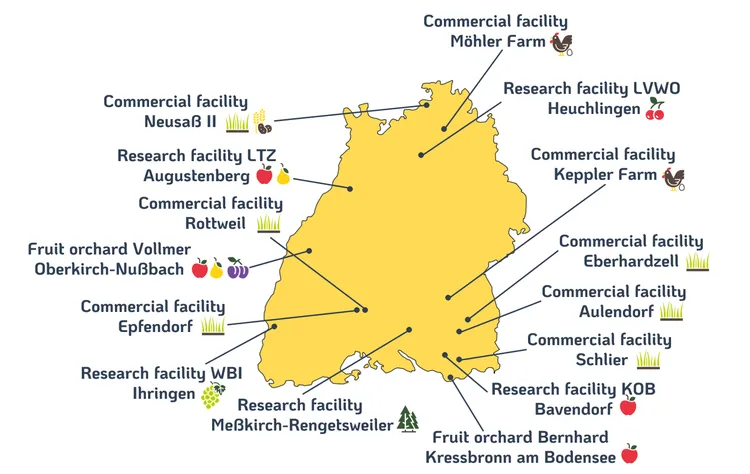
The second implementation phase started in January 2025. The aim is to continue the research at KOB Bavendorf (apples), LTZ Augustenberg (apples, pears and plums) and LVWO Weinsberg (soft fruit and sweet cherries) and investigate the potential of agrivoltaics in combination with specialty crops, while also broadening the focus to other types of agriculture. Six more pilot projects in Baden-Württemberg (Walldürn-Neusaß, Ihinger Hof, Blankenhornsberg, Schöntal and Uttenweiler, Meßkirch and five permanent grassland sites) were integrated into the project and will also be scientifically monitored and evaluated. In addition, the project will intensify efforts to develop a plant/power-optimising tracking algorithm.
Goals
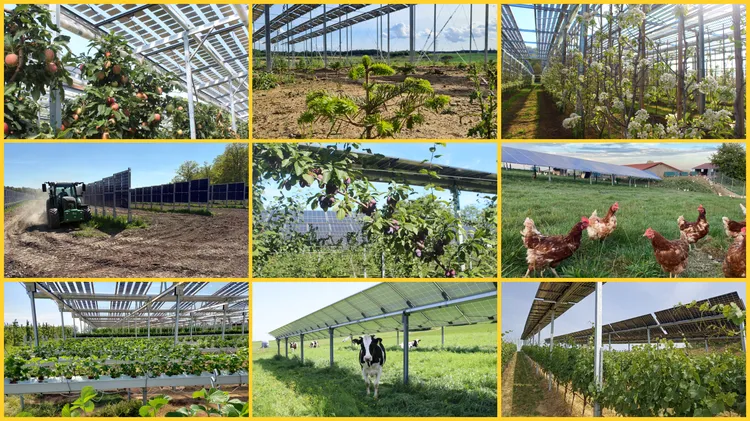
The primary goal of the project is to answer questions about dual land use for agriculture and solar power generation. By developing and studying pilot plants at five sites with different fruit crops (first implementation phase) and studying PV systems in combination with permanent grassland, arable farming, conifers, laying hens and winegrowing (second implementation phase), the project will investigate the feasibility of various promising areas of application, technologies and configuration options. The plan is to identify systems that will work for several different crops or varieties.
Additional aims
- To create synergies between the individual sites
- To investigate promising fields of application and technologies (tracking algorithm) and configuration options
- To study the effects of varying shade regimes on the growth and ecophysiology of the crop plants
- To research the impacts of crop protection products on thePV modules and substructures
- To produce handbooks for farmers and regulatory authorities
Original idea
Motivation
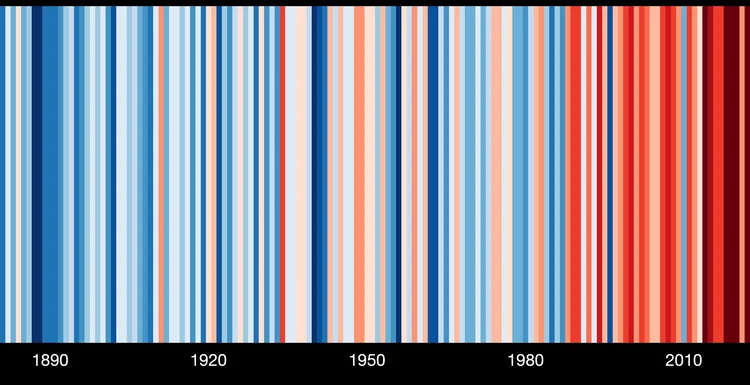
Accelerating climate change is possibly the greatest challenge that humanity has ever faced. Once dismissed as an abstract vision of the future, the catastrophic impacts of global warming are now painfully visible. The state of Baden-Württemberg has recognised this existential threat and is pursuing a number of ambitious measures to advance Germany’s federal energy transition policy. However, there are challenges associated with this vital project, especially for a country with a relatively small land area like Germany. Renewable energy production from photovoltaic modules takes up large areas, which means the energy industry is already competing with agriculture for available land.
A land-efficient approach
As land becomes increasingly scarce, rethinking its use is essential to ensure productive and sustainable agriculture. Agrivoltaic systems are designed to enable farming and solar energy generation on the same land. By integrating photovoltaic modules in ways that allow tractors and harvesting machines to operate between or beneath them, energy and agriculture can complement each other rather than compete for space.
Our findings so far
Opportunities with specialty crops
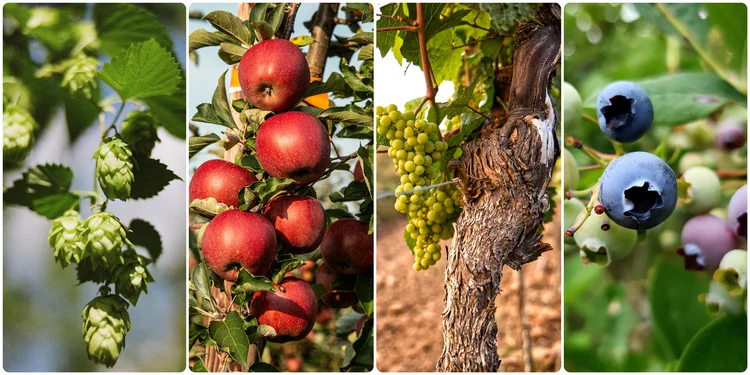
In agriculture, specialty crops are those that are particularly labour- and capital-intensive to grow. These include, fruit, vegetables and grapes, but also flowers and ornamental plants, nursery trees, hops, tobacco and mushrooms. These are products for which farmers generate a relatively high value from a relatively small area of land, compared with arable farming.
An agrivoltaic plant is a protective structure similar to the hail nets that have been used as standard weather protection in commercial horticulture for decades. Besides generating power, PV modules offer permanent, durable protection and lead to improvements in the following crop condition parameters:
- hail protection
- sun protection
- evaporation protection
- frost protection
- rain protection
References
Thalheimer, F. (2018). Baden-Württemberg: Land der Sonderkulturen. Statistisches Monatsheft Baden-Württemberg
CAP 2025
Soil science aspects
Beneficial factors for the economical implementation of agrivoltaics:
- A good connection to the grid in terms of proximity and capacity
- Row cultivation
- Permanent crops
- Protected cultivation
- Low employment of machines/low clearance height
- A large, contiguous area (> 1 hectare)
- A low slope
- High and flexible energy consumption (e.g., cooling, drying, processing)
- A willingness to invest