size
capacity

Duale Hochschule Baden-Württemberg und Landwirtschaftliches Zentrum Baden-Württemberg
agricultural research

Aulendorf, ground-mounted PV with fixed modules
coordinates: -
Epfendorf, vertical system
coordinates: -
Rottweil, vertical system
coordinates: -
Eberhardzell, overhead system with tracked modules
coordinates: -
The project
Overview
The installation of large-scale solar parks is often criticized. Although they are generally intended for poor, low-yield agricultural land, they are in practice frequently built on high-quality arable land and grassland, thereby removing these areas from agricultural production. With agrivoltaics, the agricultural land can continue to be farmed once the PV system has been installed, which means this technology is increasingly of interest for grassland too. The PV modules are erected at larger intervals (e.g. 10 metres) and may be mounted on a substructure measuring around two metres or more. This means that the meadow plants between and under the PV modules still receive sufficient sunlight, water and nutrients for growth, and it is still possible to move between the modules for cultivation and harvesting purposes.
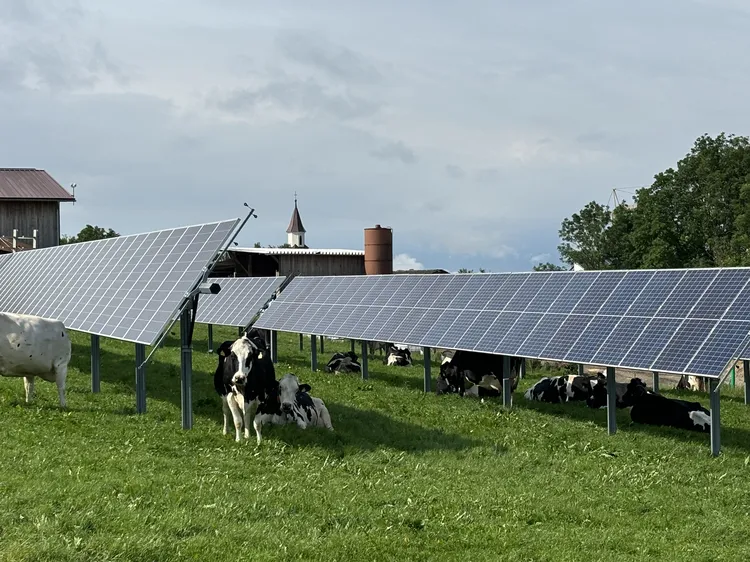
However, many questions remain concerning the impacts on farming practice. It is not clear to what extent the shade cast by the modules and the altered rainfall and temperature distribution affects the meadow plants. Since, in agrivoltaics, agriculture is the primary land use and solar electricity production is the secondary use, we need to find out to what extent the plants are affected by the PV modules. This is the question being studied in a sub-project run by Duale Hochschule Baden-Württemberg (DHBW), a higher education institution in Ravensburg, and Landwirtschaftliches Zentrum Baden-Württemberg (LAZBW), an agricultural training and research centre. The sub-project is researching the following aspects on four agrivoltaic systems and one solar park (reference site):
- The influence of the agrivoltaic system on farming (by means of a survey):
→ Evaluation of the additional work involved in cultivating the PV rows
→ Evaluation of possible problems or obstacles in cultivating agrivoltaic sites
→ Observation of animal behaviour on the meadow
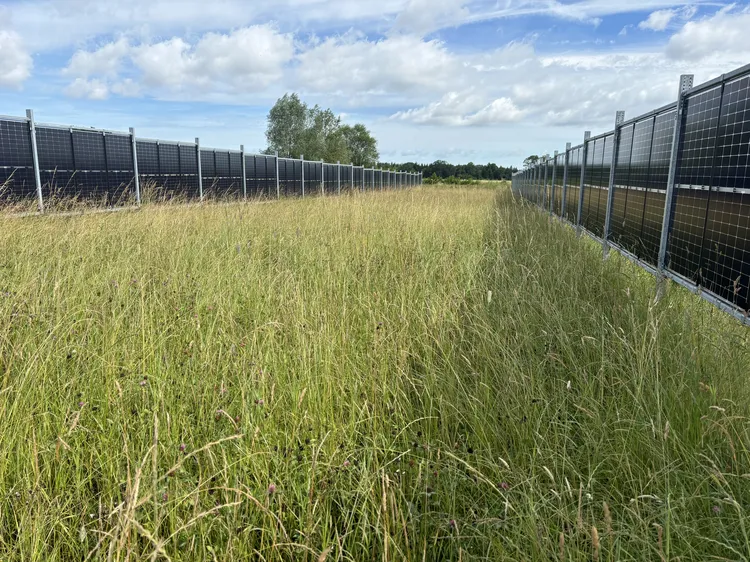
- Botanical composition and biodiversity
→ Yield percentage survey (clover/grass/forbs) at various points inside and outside the system
→ Survey of the influence on biodiversity of extensive farming of the strips in the area of the module rows
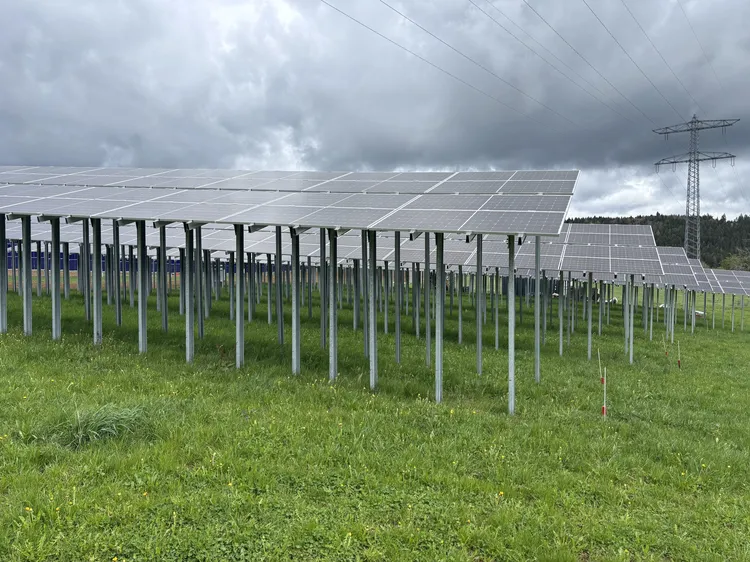
- Microclimate
→ Monitoring parameters of relevance for plant growth: temperature, air humidity, wind speed, wind direction, soil moisture, soil temperature, photosynthetically active radiation
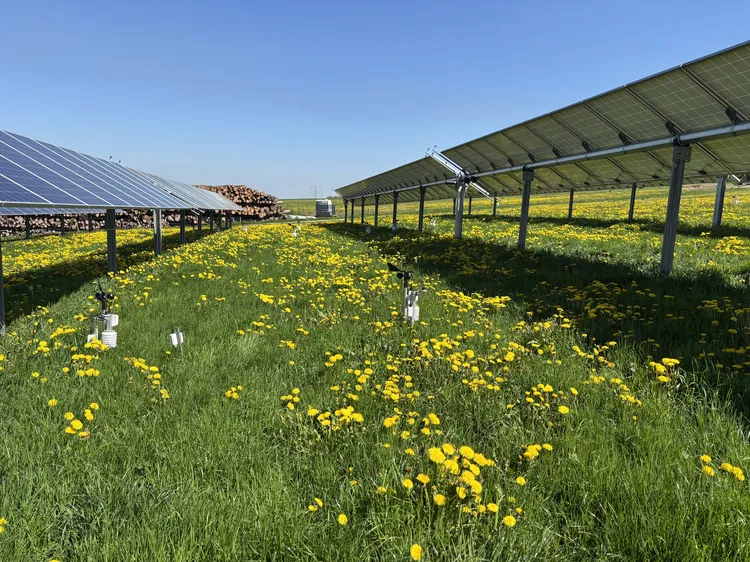
The project's findings will contribute to the development of recommendations regarding the use of this technology and management, as well as facilitating the transfer of knowledge into agricultural practice.
for the location