Monitoring
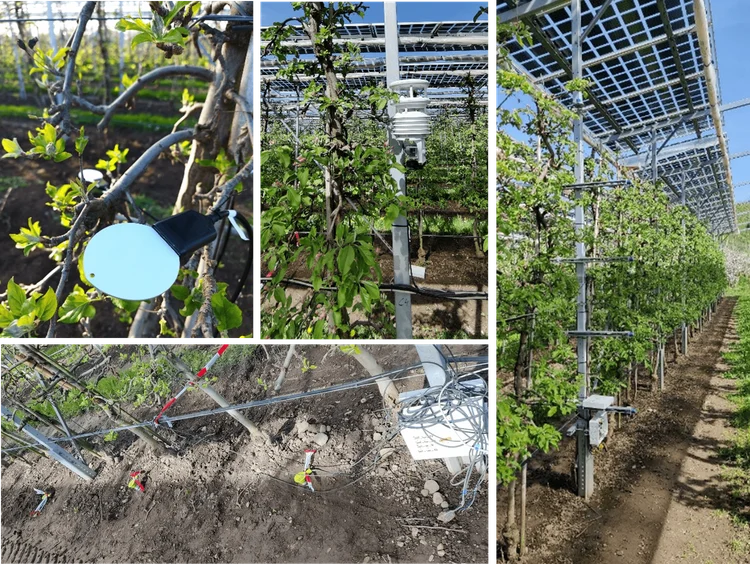
In order to understand the impacts of agrivoltaics and accelerate its expansion, it is vital to conduct detailed, standardised research on existing agrivoltaic systems in Germany and abroad. For this purpose, Fraunhofer ISE is developing a standard monitoring concept within the StaMoMo (»First Implementation of the Standard Monitoring Concept in the Model Region Agrivoltaics for Baden-Württemberg«) project. This concept includes a list of parameters to be recorded at each site, along with recommendations for appropriate sensor technology. Measurements cover four key areas: crop, microclimate, soil, and PV performance.
Project »Stamomo«
Key facts
Implementation
Kressbronn
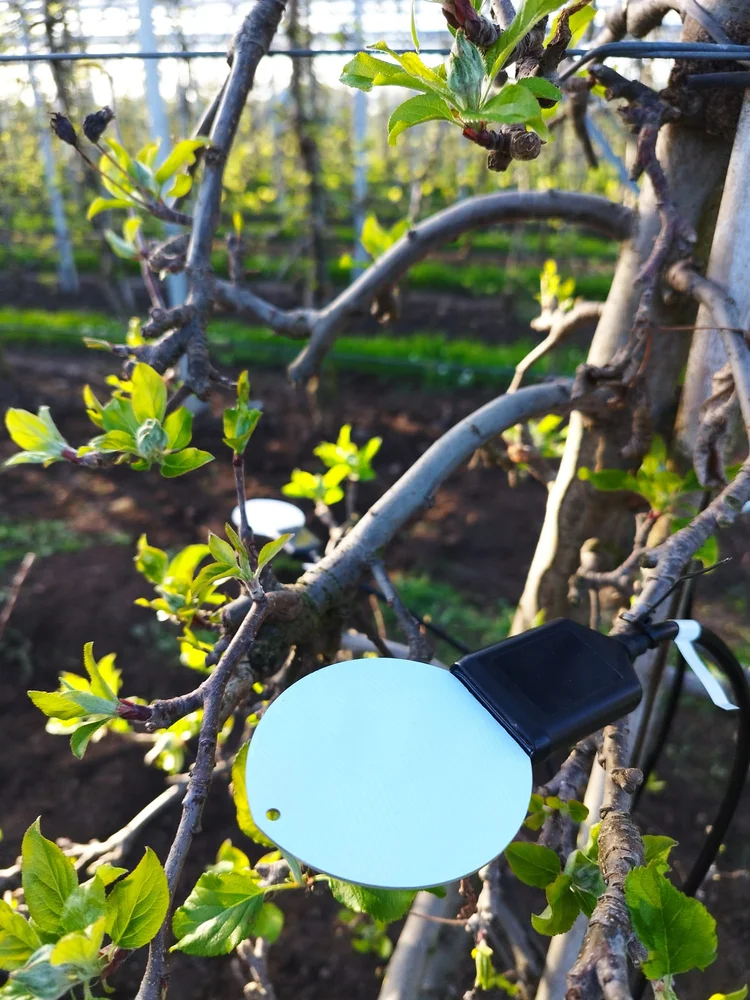
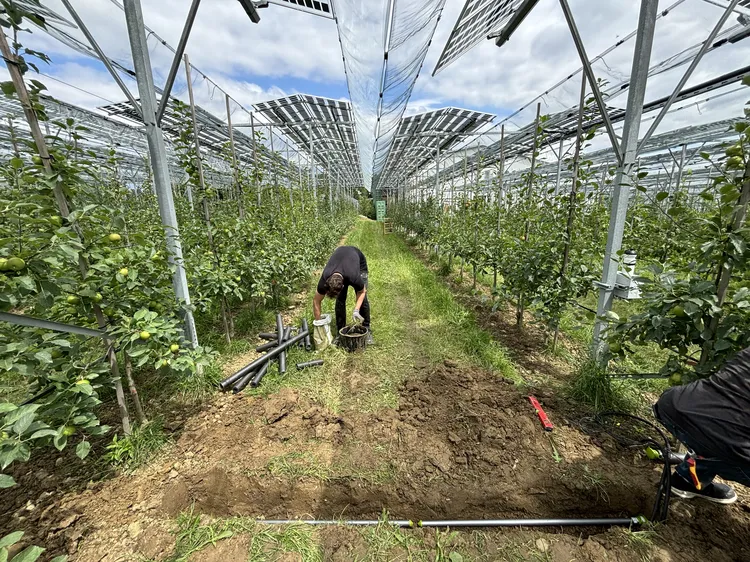
In the last week of March 2024, a comprehensive monitoring system was installed at Fruit orchard Bernhard in Kressbronn am Bodensee. The system includes soil and sensors, leaf wetness and temperature sensors, microclimate stations, a weather station, and reference cells.
Kompetenzzentrum Obstbau Bodensee
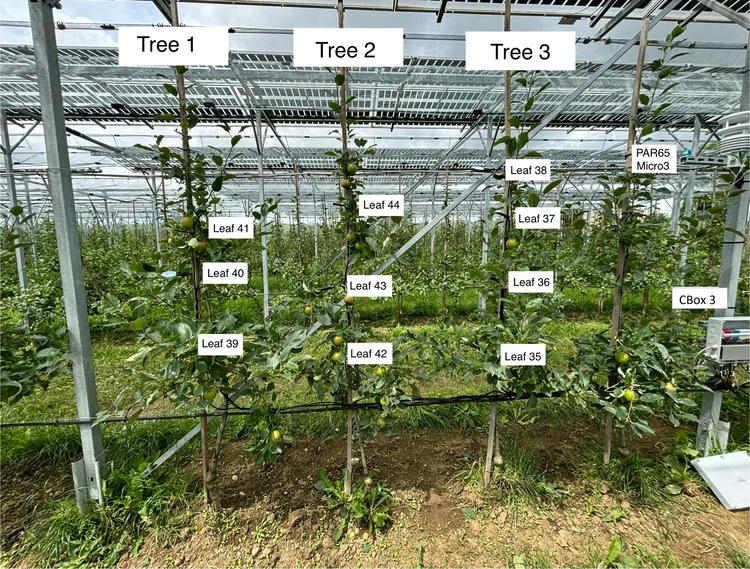
In early July 2024, the monitoring system was commissioned at the KOB in Ravensburg. The same sensors were used as those installed in Kressbronn. These were deployed in equal numbers in the fixed system (North Field), the tracking system (Middle Field), and the reference area (South Field).
Oberkirch-Nußbach
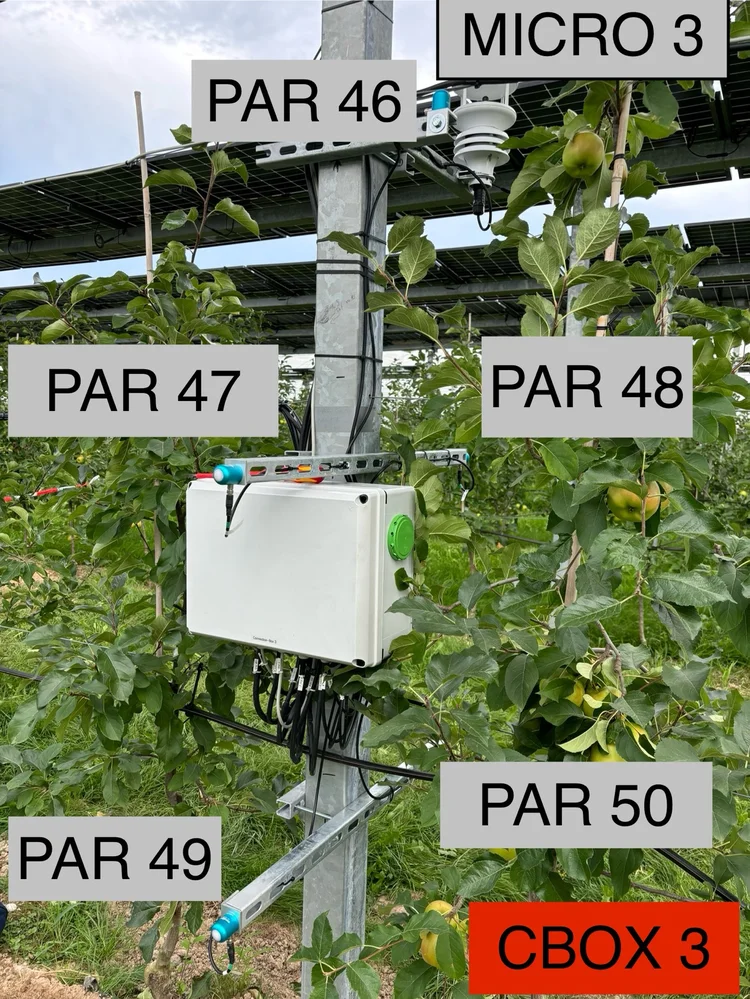
In mid-August 2024, a monitoring system was installed at the Fruit orchard Vollmer. Here too, sensors were installed in the reference area as well as on the trees and in the soil beneath the PV modules.
Staatliches Weinbauinstitut Freiburg
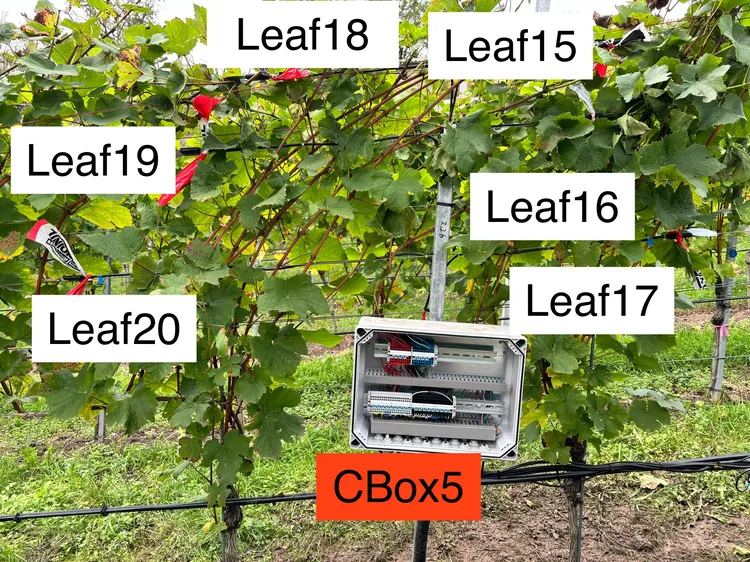
The Viti-PV facility of the project was also equipped with a monitoring system in October 2024. As at the other sites, a microclimate station as well as soil, leaf, and PAR sensors were installed.
Staatliche Lehr- und Versuchsanstalt für Wein- und Obstbau Weinsberg
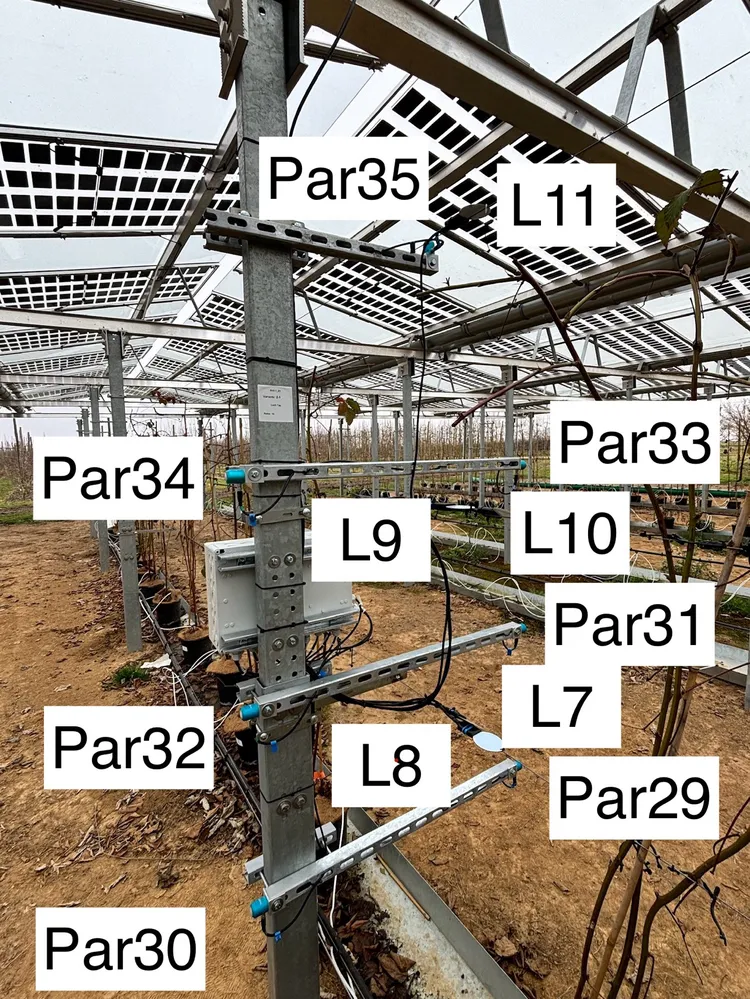
The next milestone in the project was reached in early February 2025: The monitoring system at the Agri-PV berry facility of the LVWO in Heuchlingen was successfully commissioned. At this site, the reference area is located in a berry tunnel.
Landwirtschaftliche Technologie Zentrum Augustenberg
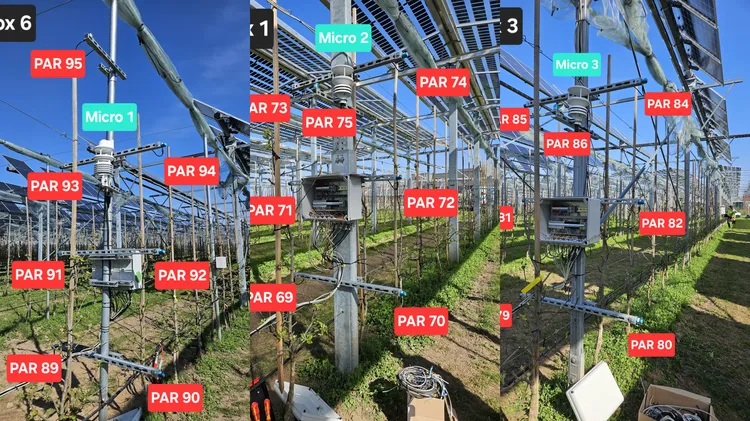
The monitoring system of the last facility built in the first phase of the project at LTZ Augustenberg was installed in March 2025. The image shows the microclimate stations on the reference area (left), under the tracking system (center), and under the static system (right).
Challenges & Potentials
- Insights from disruptions: At most sites, the team must has faced sensor failures. This is due partly to the complexity of the installed system and partly to the fact that the purchased sensors have not yet been tested long-term in combination with the developed system. However, this does not necessarily represent a disadvantage – rather, these experiences are being incorporated as valuable insights into a guideline.
- Focus on one crop per site: Sensors are installed along a single plant row at each facility. This means only one fruit is studied per site. For example, while the LVWO facility grows various berry types (e.g. blackberry and blueberry ), the sensors are placed exclusively with the raspberries.
- Energy yield: At most sites, additional energy meters were installed where technically feasible and where systems were already grid-connected, even though these were not originally included in the project proposal. These devices enable precise measurement of the electrical energy consumed by operations over specific time periods.
for the location