The English version of our website is currently under construction. We’ll be online soon. Thank you for your patience!
Mehr erfahren
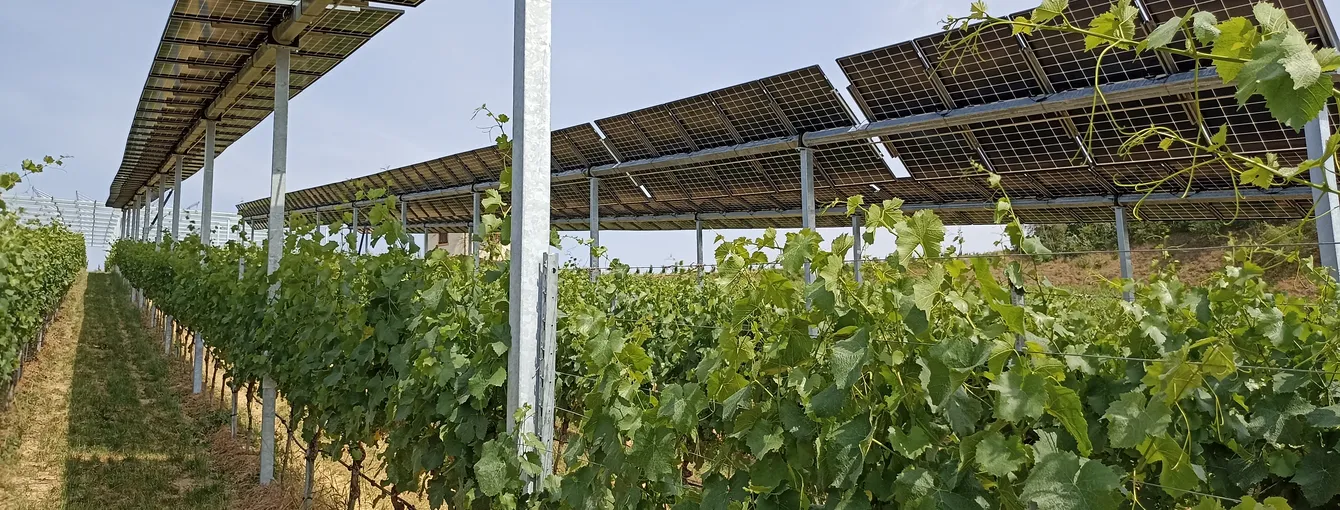
Agrivoltaics (AV) is set to be a transformative technology, offering a groundbreaking solution to the competition for land by enabling the simultaneous production of agricultural goods and electricity via photovoltaic modules. Implementing AV in Germany requires pilot projects and a wide range of expertise. Find out more about our AV projects in Baden-Württemberg here!
Mehr erfahren
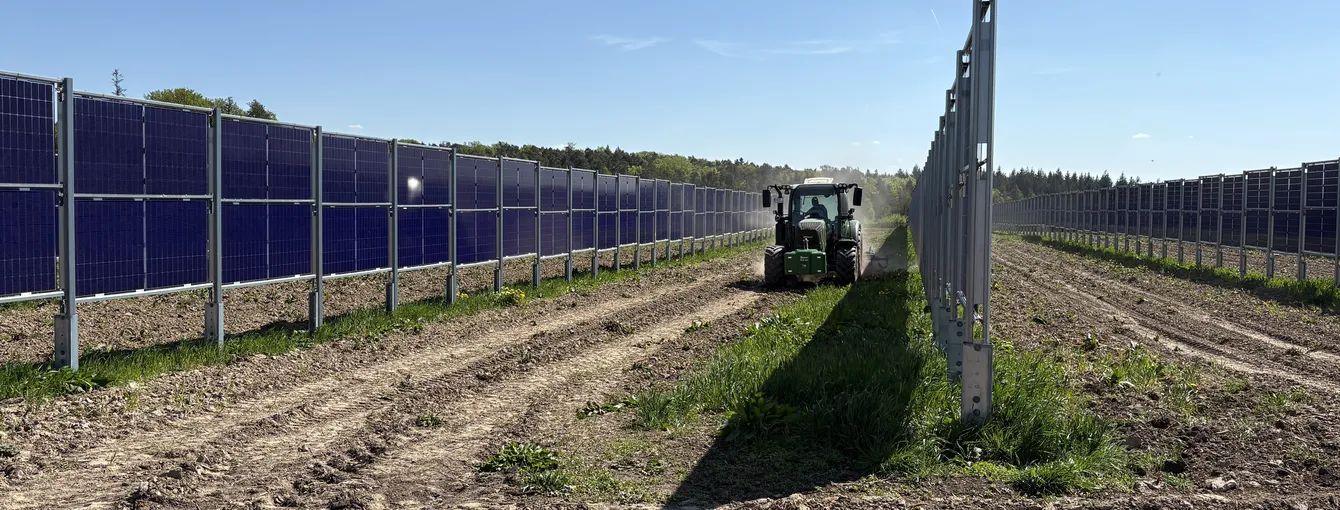
Agrivoltaics is as diverse as agriculture itself. During the first project phase (2022–2024), we focused on combining photovoltaics with the cultivation of speciality crops such as apples, pears, plums and berries. In the second phase (2025–2026), we will expand our focus to include grasslands, livestock, grapevines, arable crops, and conifers.
Mehr erfahren
Understanding the complex interactions between agriculture and photovoltaics requires an integrated approach. The interplay of various disciplines, from agricultural sciences and systems engineering to hydrology, legal aspects and social considerations, is essential to establishing agrivoltaics as a sustainable technology.
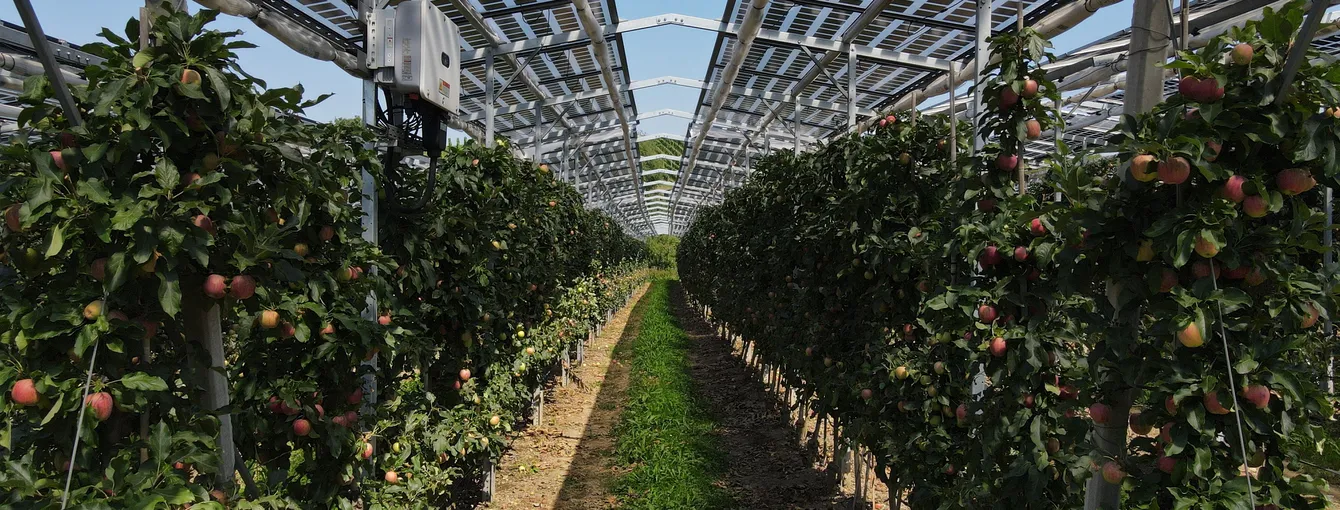
Mehr erfahrenClimate change threatens our harvests through intense solar radiation and an increasing number of extreme weather events such as hail and heavy rainfall. In addition, there is growing competition between energy production and agricultural use for available land. Agrivoltaics (AV) could help address these challenges: photovoltaic modules are installed above the cultivated areas, allowing fertile soils to remain viable for farming while also providing additional weather protection for the crops. This way, food and electricity can be produced on the same plot. The orientation and transparency of the PV modules are tailored to the plants' specific needs. The foundation-free substructures allow complete removal without residues that could impair future agricultural use. Further research aims to unlock the potential of this technology for Germany.
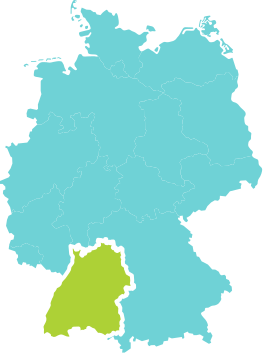
The project »Model Region Agrivoltaics for Baden-Württemberg« involves an interdisciplinary consortium of over 20 partners aiming to advance the expansion of this technology across the federal state of Baden-Württemberg, with financial support from the Ministry of Environment, Climate and Energy Sector and the Ministry of Food, Rural Affairs and Consumer Protection. During the first phase (2021-2024), research concentrated on pome fruit, stone fruit and and berry fruits, with agrivoltaic systems exceeding 1.700 kWp installed at five sites (Bavendorf, Heuchlingen, Karlsruhe, Kressbronn am Bodensee, and Oberkirch-Nußbach). The second phase (2025-2026) broadens the focus to explore the potential of the combination between photovoltaics and livestock farming, winegrowing, reforestation, grasslands, and arable farming.
Durch das Anklicken des Vorschaubildes werden Sie zu YouTube weitergeleitet. Dort gelten die Datenschutzrichtlinien von YouTube.
Beim Landwirtschaftlichen Hauptfest in Stuttgart waren der Bundeslandwirtschaftsminister Cem Özdemir sowie der Minister für Ernährung, Ländlichen Raum und Verbraucherschutz Peter Hauk und der Präsident des Deutschen Bauernverbandes Peter Rukwied vor Ort und statteten der Agri-PV-Demonstrationsanlage vom Fraunhofer ISE einen Besuch ab. Schwerpunkt des Gesprächs war die »Modellregion Agri-PV BW«.
Baden-Württembergs Minister für Ernährung, Ländlichen Raum und Verbraucherschutz Peter Hauk eröffnete die zweite Forschungsanlage des Projekts am Standort Heuchlingen der LVWO. Das Agri-PV-System verfügt über komplett geschlossene Kreisläufe für Wasser und Nährstoffe, um einen möglichst ressourcenschonenden Anbau von Strauch- und Erdbeeren zu erproben.
Das erste Solarpaket setzt wichtige Maßnahmen der PV-Strategie von Mai 2023 um und bringt uns der Energiewende einen großen Schritt näher. Zum einen führt es ein eigenes Untersegment mit einer bestimmten Menge für besondere Solaranlagen wie Agri-PV ein. Zum anderen sollen hochaufgeständerte Agri-PV-Anlagen mit extensiver Bewirtschaftung einen Bonus erhalten. Mehr Infos hier.